Review: Aso Natsuko – My Starlit Point

Aso Natsuko is one of those idols I really wish got more press. It could be mostly my personal biases, but she’s had consistently good music and is a strong performer. As a singer that mainly does things for anime openings, so she doesn’t really get considered among most idol performers, which is unfortunate. Also unfortunately, she just announced that her music career is going on hiatus. This is an understandable move; she is a presenter on ZIP, a morning TV show and is, of all things, in school as a law student. While I wish Natsuko the best of luck in her future endeavors, and I know she’s going to be successful at whatever she does, I can’t help but be a little disappointed. This album, as I’ll elaborate further, makes me wish that she was sticking with this, on a purely selfish level.

1. My Starlit Point – Every Natsuko album comes with a titular song that generally does a good job of summing up the album as a whole. My Starlit Point is no exception. I recommend Natsuko’s albums for a reason; they are cohesive products that feel like a natural whole, as opposed to the collection of singles that idol albums too often tend to fall into.

This song is an upbeat, pleasant song that isn’t as dramatic as some of the later songs (MoonRise Romance is one) in the album but is probably the best way to start it off. The instrumentation could have been too busy and overdone; there’s electric guitar, strings, some (fake) brass instruments, percussion, clapping and Natsuko is often doing some background/echoing vocals. However, it’s a testament to the arrangement that so many elements sound so cohesive and never detract from the melody and from Natsuko’s vocals. She sounds especially good here; it’s clear she’s continuing to improve as a vocalist.

This song is light and pleasant. It occasionally veers into the dramatic swelling strings that define some of the later songs, but this is mostly a pleasant, easy to listen to song. 8/10

2. Merry-go-Round– This is actually a B-Side from the Lovely Girls Anthem single. Natsuko sang this when I saw her live, and this was the one song I really wanted to listen to more, so I’m very glad it made it onto the album!

Merry-go-round features one of my favorite hallmarks of Aso Natsuko’s music; her fast singing (and how she does her background vocals). While it’s not quite to the level of Parade (which comes straight after…) some of the fast lines are enough to make some vocalists trip.

This starts off the trend of very staccato, pizzicato performing, particularly in the backing strings. This is a running motif of this album, and I think a very indicative one for whether you will care for this album. If this sounds a bit too precious for you, you might want to stay away. However, I personally love it, so this album fits with my personal tastes.

This is not the best or the most mind-blowing song by Natsuko; in fact, it feels very standard for this album. However, that’s particularly why I enjoy it. 8/10

3. Parade – One of my top songs of 2012! Parade is probably the single that fits least on this album (though Fighting Growing Diary could be debated). While strings (well, string sounds) are still here, the main focus of Parade is a strong, driving drum beat and the electric guitar. It never stops sounding like a Natsuko song, but it focuses more on the upbeat rock type of sound you get from a drum/guitar heavy arrangement/mix. The guitar solo is quite nice, and I’d feel comfortable putting it on a list of best guitar solos found in idol songs (OK where is this list).

I also mentioned that the fast singing that Nacchan is known for is in here. Which it is. She sounds fantastic rattling off these lyrics. Some sound slightly awkward, but Natsuko delivers it with such style that it doesn’t matter.

The song is fun, almost uplifting, and is a pleasant deviation for this album. It fits Natsuko remarkably well, and the balance of the arrangement is spot on, like always. 9/10.

4. Fighting Growing Diary– I generally like all of Natsuko’s music. However, for a long time, this is what I considered to be Natsuko’s weakest single. It’s not bad, but I never loved it as much as Parade, and found it to be an anomaly of her singles catalog. However, with some listening, it doesn’t feel as anomalous. There’s still a lot of pizzicato strings, for example. The instrumental might be mostly (way fake) brass instruments and Natsuko never sings fast, but this is still a worthy, happy song.

That said, even after a new appreciation, it is the weakest single that appears on the album. There’s no drama from swelling strings, it doesn’t have the guitar-driven excellence of Parade, and it’s not nearly as pleasant to listen to as My Starlit Point. This isn’t to say this is a bad song; not at all. However, if I had to pick a weak link from the pre-established songs of this album, this would be it. 7/10

5. CROSS x OVER SENSATION – This is the other A-Side on the Parade single, and, as much as I love Parade, this has to be just as good as Parade. Whereas Parade was more of the rock-inspired side of things, CROSS X OVER SENSATION goes back into the upbeat, happy side with lots of staccato. The arrangement of this does feature some guitar (the bridge near the end is especially good) but it’s mostly electronic instruments. I wish that Nacchan would have been able to perform some of this stuff with a full band and orchestra, because that would only improve the songs.

CROSS X OVER SENSATION is cute and upbeat, but Nacchan manages to fit the song perfectly. Even though this is no test of her vocal skills it still allows her to emote and make her voice fit the song. She also does all the background vocals, and those work together nicely. Some of the best Natsuko songs have her voice playing together in harmony and as an echo, and that works the best here. The choruses are improved immensely by the response of “Sensation” to her vocals.

This is a surprisingly good song that manages to hit the level of Parade. The back and forth is particularly pleasant, as is the arrangement. 9/10

6. Watashi Iro Clothes – This is the B-side to MoonRise romance, and manages to be more guitar driven while including the great string sound. I do like that there’s what sounds like some deeper strings like a bass in there in the chorus; it’s a nice reprieve from the rest of the song.

This is a fairly mellow song that was one I skipped over on my first listen through of the album. However, it’s the type of song that grows on you with more listens. As always the instrumentation is very nice, although this throws in a little electronic sound that is almost dubstep-esque. It is surprising but sounds very nice.

While the instrumentation does make it a tad heavier (especially after the airy and upbeat CROSS X OVER SENSATION), this song is mellow and pleasant, and comes at exactly the right time in the album. 8/10

7. Lovely Girls Anthem – One of the mellower tracks, Lovely Girls Anthem is pretty understated, and as such I think it’s a little underrated for the Aso Natsuko discography. That said, it’s still a rousing fairly fast number that only feels mellower in comparison. That said, it is a cute song that only improves after more listens. When I saw Natsuko live I liked this song, but was waiting for Perfect Area Complete and the other hyperactive songs that Natsuko does so well. However, after listening to this song more and more, it starts to stand out more.

The one thing that sounds especially good is the harmonizations that Natsuko does with herself; she has a very beautiful voice, and hearing it in duplicate or triplicate just works. It’s one of the things I like about a lot of Natsuko’s songs, but it’s especially good here, and is the particular item of note for the song. The other elements (catchy melody, strong arrangement, strong vocals) are all there, as well.

All of this said, this also fits really well into the album. If you haven’t liked Natsuko’s music until now, then I doubt you’ll like Lovely Girls Anthem. However, this is a song that has grown on me a lot, and has become a valuable part of Nacchan’s discography. 8/10

8. MoonRise Romance – OK, why didn’t I put this in my top songs of 2013? I’m serious. I don’t think I gave this song the attention it deserved when it came out, because this is fantastic.

The biggest strength is in the strings; there is a really great instrumentation here, with the swelling of the strings. This adds to how well the song builds over the course of the song; the whole thing builds and builds. The slower, jazzy part that seems to come from out of nowhere only serves to make the following section even more explosive.

This song is a fantastic pop song, and one I wish I got more into sooner. Its arrangement is perfect, and does a great job of serving how well the song builds. This is wonderful, and, in hindsight, one of my favorites of 2013. 10/10

9. Fuantei na Wakusei – After a song like Moonrise Romance any song is going to be a bit of a letdown. However, Fuantei na Wakusei is probably the weakest song of the album. It’s a much more electronic-based song. There’s a lot of dissonant sound in the background, and it manages to be much more minimalist than the rest of the album.

The thing is, this isn’t a bad song. I like it a lot. The worst crime this song does is fit the wrong album. This song would be a perfect fit for Precious Tone, and would fit well next to something like Tokimeki Traveler. This is just the odd duck of the album.

I do like how this song builds, and how everything seems to crescendo throughout the song. The start of the song is very low in energy, but it builds up nicely. Natsuko’s voice sounds great here, too. I like how mellow it is, and I do like the instrumentation. It just doesn’t fit.

If this song was on Precious Tone, it would probably be one of my favorite songs on the album. However, on an album like My Starlit Point, it doesn’t quite fit. 7/10

10. ICE NINE – ICE NINE continues with the more electronic feel of Fuantei na Wakusei, and, again, would fit very well on Precious Tone. However, ICE NINE tends to have much more of a drive to it, and has the upbeat feel that’s consistent throughout the album. Further, while all the instrumentation is clearly electronic, there are many points where it sounds like it’s trying to approximate strings. Everything is a bit more dissonant than the rest of the album, but in a good way.

Still, while I do like that they are trying something new and this does fit a bit better than Fuantei, these two songs (soon three) have created a weird pocket in the album of much more mellow, much more minor/dissonant stuff. It’s all great, don’t get me wrong, but I kind of wonder if it would have been possible to spread these out throughout the album.

ICE NINE is good, and I like it a lot, but again it feels like it doesn’t quite fit as well. 7/10

11. You’re My Brightness – If you were wondering about Natsuko’s vocal skills, look no further. While Natsuko sounds great on all of these tracks (another reason why this album is so great), You’re My Brightness is a ballad that shows off how strong her vocals are. She sounds beautiful.

The ballad itself is pretty standard and doesn’t break any barriers. The way that the song is set up is nothing new. What should make you want to listen to this ballad, however, is just how well polished it is. Natsuko sounds fantastic, the strings are particularly good in this one, and get an extended focus at the end. The end of this track makes You’re My Brightness as much about the instrumentation as it is about Natsuko. The songwriting itself is a bit bland, but the arrangement is lovely.

This song won’t convince you of Natsuko’s music, but it should convince you of Natsuko and the strength of the team behind her. 8/10.

12. Never Ending Voyage – How is this not in my top 5 songs list of 2013? Seriously, Never Ending Voyage is pure pop music perfection, and the best way to end an album (even though ending your last album with the track “Never Ending Voyage” is kind of cruel). After the mellow songs off the album, Never Ending Voyage ends things with a bang. It’s pure orchestral-focused energy. Even in the mellowest sections of the song there is something, a guitar or a drum beat that is driving everything quickly. Even with this, though, it’s never exhausting or gets overplayed; there’s enough variety present in the song to make it keep my interest.

Everything about Never Ending Voyage is done perfectly. The melody is catchy but doesn’t feel old hat. The arrangement is, like always, perfect, with beautiful strings work. I don’t know if they recorded the strings in a different location or added in some echo in the mixing, but they sound superb. Natsuko as always sounds fantastic, but she really sells it on this song. She delivers her lines with such a punch that even though this might not be as strong a test of her vocal ability as You’re My Brightness, it still might be one of her best songs ever vocally.

While I wish Natsuko wasn’t going on hiatus, what a way to go. It is the perfect end to this album and the song that exemplifies why Aso Natsuko is worth following. 10/10

Overall: This album doesn’t have that many new songs, not really. A lot of B-Sides are on the album, and this is something I’ve criticized albums for in the past. I would have liked more songs. However, that can be forgiven because of how successful My Starlit Point is as an album. Every song, even the ones that feel like they’re a bit misplaced, is excellent. There is no weak link, and the best songs are some of my recent favorites. Every element is working at a very high level, making an incredible album. Honestly, I feel like this has to be my album of the year; nothing will be able to compete. I hate saying that so early in the year, but this is the type of album that I will be looking back on as one of my favorite idol albums.
Announcement: Big Changes to Happy Disco

You may have noticed that my posting has slowed down as of late.

I’ve given my standard excuses; that I’m “busy with work” and “have a lot on my plate with my personal life.” While all of that may be true, there’s another thing. Some of you might know this, but I do want to work professionally in the media world. I’ve been giving a lot of thought to things, and I’ve started to look into and work towards applying to grad school. This will slow down my posts to Happy Disco, and I apologize. But, while thinking about that, I had an idea.

See, I want to show prospective employers that I can do a good job in promoting a group, and writing under strict parameters. I want to incorporate good corporate synergy into my blogging, so that I can show a prospective employer about this. If you are wondering “Serenyty, what’s that corporate synergy you’re talking about?” I’ve embedded a video below that does a great job getting at the basics.

So, in the interest of corporate synergy, starting this April Happy Disco is now becoming Happiness Disco. And yes, I’m going to be focusing on the JPop group Happiness.

http://youtu.be/UDKADsUiE28

It’s not that big of a change, not really. I would be a fool’s to ignore such strong synergy in my blogging. I liked parent group E-Girls’ Gomen Nasai no Kissing You last year, and I figure that I can make liking Happiness work. I can also sometimes write about E-Girls, so. Gomen Nasai no Kissing You PV time!

Some of you might be wondering; how are you going to talk about Happiness all day? Well, the answer to that is cross-promotional synergy. While I focus on Happiness, I can also focus on any song title that might have “happy” in it. Sekaiichi Happy na Onna no Ko is one option; so is Happy Daisakusen. However, the number one song that will be on everyone’s mind when they visit Happiness Disco is now going to be Kusumi Koharu’s seminal classic “Happy.”

(I’ll also play Happy Happy Sunday but I think I’m over Hyadain).

Let me know in the comments what kind of changes you would like to see in Happiness Disco! But beware; you have to include “Happy” in every sentence you write, otherwise my comment filter will get rid of it.

Idol Thoughts: Indie Idols and Barriers to Access

One person so far has taken me up on my offer of suggesting a topic for Happy Disco after donating to Idol Matsuri’s Indiegogo campaign! (DONATE HERE). That person would be James of This is Your Wake Up Call! James’ biggest idol interest is in Indie idols, and asked me to talk about it. Once we talked briefly, we got on a subject I’ve considered talking about, and that’s the difficulty of being a foreign fan of indie idols.

I have been neglecting Pure Idol Heart unfairly lately, but I do contribute to that site, and often the owner of the site, Gaki, will suggest groups he likes (since he’s in Japan). However, it’s hard to look things up for most of these groups in English. James mentioned that he doesn’t speak Japanese, and my Japanese skills are rusty and spotty. I’m honestly terrible at remembering kanji. So there’s a clear language barrier in enjoying idol music, especially indie idols that might not have a huge English-language fanbase.

However, beyond that, there’s often not that much out there for indie groups. Back when I was covering RYUTist for my TIFriday posts (about Tokyo Idol Festival), I sung praises for the group’s website. While part of that was a bit hyperbolic and I really do like the group for other reasons, it is rare that an indie group would have just so much stuff online. There are a lot of idol groups out there that might only have an ameba blog as their website, if even, and very basic things in terms of youtube presence. I think a lot of this is due to many indie groups mainly existing as a live presence; they coast along on one or two releases and do the majority of their work in lives. This means that they aren’t always focused on keeping an up to date twitter, Facebook, website, youtube, etc. It makes sense, but it again makes things harder on foreign fans.

All these barriers make it really difficult to keep following smaller idol groups. Occasionally there are dedicated Japanese fans that make it easier; Aither has Chibineko Suwano who uploads a ton of videos and has been contributing in English to Idol Matsuri plans. MMJ (a Hiroshima-based group I like) has Kats/Grayengineer who has contributed to the Hello!Online thread about the group and generally writes in both English and Japanese about the group (mostly if you ask him, but he’s very nice!). But that’s the thing; to be a follower of an indie group where the management isn’t thinking too much towards international fans, you need someone to be the gatekeeper of information. And really, why should an indie group try and think of foreign fans, when they won’t be coming to live events and can’t purchase goods?

That said, being a fan of indie groups can be a lot of fun. I’ve written a few times on twitter to MMJ’s Kyao, and she responded to me. I’ve been able to get responses from the Rev.from DVL staff (though this was pre-Kannagate, so idk if they would now) and from a few idols. There’s just a lot more of that direct communication that isn’t allowed or possible with larger groups. In a way, even though accessing videos and information is harder for indie groups, they can be easier to reach, despite being foreign. And while this does require some Japanese skills, one of those barriers, watching indie groups grow can be really rewarding. As a Rev. from DVL fan, I was so ecstatic to see their PV for Love Arigatou, because it represents years of hard work. The growth of Rhymeberry from a smaller group to the group that did SUPERMCZTOKYO is also very rewarding. And I still can’t really believe that small upstart group Momoiro Clover is where the are right now.

Indie groups aren’t always easy, but the rewards of being a fan can be definitely worth it.

And, for a bit of fun, here are some of the indie/lesser known groups that I’ve been following lately!

Tochiotome25

This group really caught my eye at last year’s Tokyo Idol Festival, and they have really blown me away with this latest song (“Dokkaan! Ichigo Sakusen”). The girls all have ridiculous amounts of energy, and while their previous work has been cute and fun, Dokkaan! is taking things to a new level for them.

MIKA☆RIKA

This song, “Funky OL ~Shigoto Shitaku nai yo~” (Funky OL ~I don’t want to work~) has kind of been my jam since I started working full time. While Rhymeberry is my hip hop group of choice, I kind of enjoy how fun and silly MIKA☆RIKA get in this song and PV.

Kawasaki Junjou Komachi
http://youtu.be/cVY0k7RUVhQ
Aside from Kawasaki Junjou Ondo being pretty much a perfect song, I like this group’s commitment to wearing yukata and being generally traditionally Japan inspired. Created to support Kawasaki, this group has a lot of talent and I enjoy every song I’ve heard from them. In a weird way they remind me of early MomoClo, which means I definitely want to hear more from them!

GALETTe

This group has been getting some hype lately, but it’s pretty well deserved. Taken from idols who have been active idols in the past, GALETTe is basically an indie idol supergroup. ‘G’ is still my favorite single by them, but Jajauma to Yobanaide has gotten people talking because it added former HKT48 member Komori Yui to the mix. This is a group who is still very new, but has the opportunity to become big.

Muto Ayami

While Mizuno Yui has always been my Sakura Gakuin favorite, there is something special about Muto Ayami. She has a really strong idol presence that was pretty captivating in the Sakura Gakuin stuff she was in before she graduated (especially Twinklestars. Never forget Twinklestars.). So when it was announced that she was making her solo debut, I was all on board. She’s just started putting out music, but she’s really a soloist to look out for.

Sunmyu

Sunmyu is a group I never thought would get as good as they are now. I mean, they were always a cute group, but it took them covering my favorite Japanese song ever “Natsu Matsuri” that got me excited. While they did a great job with a song like Natsu Matsuri, their regular focus is on mellow, pleasant songs and generally having the feel of being classic idols (though they don’t quite have the music of the greatest classic idols). I’m amazed at how far they’ve come, and I’m interested in more.

RYUTist

I’m super excited for Idol Matsuri, and all the guests who are coming. Aither is really cute, and I can’t wait to meet them. However, RYUTist is a group I was starting to grow to like before Idol Matsuri, and the prospect of meeting them has fanned the flame even more. They have a lot of fantastic music and are all solid performers. I’m planning on buying some goods to support the Idol Matsuri Indiegogo, but I’m waiting on buying an oshi towel until I can figure out who my favorite is, because I like them all.

This is just a small segment of the really strong indie idol scene going on right now. This is why I follow Tokyo Idol Festival so much every year; it’s a great resource to finding newer idol groups. While they may be harder to find, there’s a lot to like in the indie idol scene, and it’s a scene I know I need to keep digging more into.

Review: Babymetal – Babymetal

I’ve been a fan of Babymetal’s since they were just a unit for a Sakura Gakuin album. Since then, they have become something of a phenomenon, helping inspire more and more alternative idol units. It’s not too much of a stretch to say that groups like Alice Juban have been helped by Babymetal’s relative success. Babymetal is also second to Kyary Pamyu Pamyu in terms of Western reach of Japanese pop acts. I watch Comedy Central’s show @midnight regularly, and I was surprised to see Babymetal featured on the show. Even if Babymetal (and Kyary) are only really viewed in an “oh Japan” light, it’s still exposure that might increase the public perception of JPop. Babymetal DID reach #3 on the American iTunes charts, after all. I was trying to out-weird a friend in music tastes, and when I showed her Headbanger she replied “Oh I already know Babymetal.” It isn’t always helpful for the public perception to be “what weird stuff” but hey, look at how successful Kyary has been, doing a mini tour in the US.

Babymetal has finally put out their first album, which is, like I said, getting more international attention. It collects all their singles and songs through Megitsune and adds three new ones. While this means that if you’re already a Babymetal aficionado you will probably already like this album, it doesn’t necessarily mean it’s a successful one. So how is Babymetal’s first album?

1. Babymetal Death – this is the B-Side from Ijime, Dame, Zettai for the limited editions. For picking a pre-existing song, Babymetal Death is probably the best song to start things off. Since, you know, it is an intro song. This is nearly six minutes of metal guitar, metal vocals, and occasionally the girls repeating “Sumetal Death, Yuimetal Death, Moametal Death, Babymetal Death.”

This is the type of thing that is pretty appreciated at concerts; I can imagine getting really pumped up hearing this. As a non-metalhead, though, I don’t think I fully appreciate listening to it on its own.

It’s a good opener that has good metal elements; the choral vocals work especially well. It’s not the type of song you’d listen to on its own, but it does its job very well. It doesn’t quite have the appeal of some other idol group overtures just by virtue that this is metal and lacks the cheese that some of them rightfully have, but it’s still a good representation of Babymetal.

2. Megitsune – I considered Megitsune to be one of my favorite songs of 2013 and I stand by that. While Babymetal started the year out strong with their long-awaited major debut Ijime, Dame, Zettai, Megitsune remains a lot more compelling to me. Megitsune combines Babymetal’s standard blend of metal and pop with some more traditional Japanese sound. This blend shouldn’t work as well as it does, and Megitsune is a cohesive song that manages to be accessible, despite the varied elements that it brings together.

This song is a mixed bag; some people are much less fond of this than I am, and I honestly do not blame them. If you’re looking for the most metal experience, Megitsune is not your song. However, I think it ended up being one of Babymetal’s most successful songs for what they do in blending genres and mixing pop with metal.

3. Gimme Choco. – One of the things that Babymetal sticks with, for better or worse, is the whole pop song formula. Their arrangements, vocals, instrumentation may scream metal (literally), but the songs themselves, at their core, are often pretty standard pop songs. Ijime, Dame, Zettai for example – the instrumentation is metal, but it has a pretty standard verse –chorus structure. It’s a song that you could imagine as a standard idol pop song if it was done by a different group.

Gimme Choco is a different beast; parts of it sound pretty standard idol pop (the sung sections by Suzuka, mainly), but it doesn’t have a very similar structure. It’s mostly alternating Yui and Moa’s shouted parts and Suzuka’s shouted parts. In a weird way, Suzuka’s vocals almost sound like they should be a part of a different song, like they’re an idol pop song that Gimme Choco sampled. This isn’t the case, but it sounds that way at times.

Gimme Choco is the type of song that shouldn’t be catchy the way it is. The first listen I was unsure of what to make of Gimme Choco, with its unusual structure and how disjointed Suzuka’s vocals were with the instrumental parts. However, this is a song that will get in your head and not get out.
I don’t think this is Babymetal’s best song, but it is a good one. It’s the type of song I’m glad is an album song; I like listening to it, but I can’t see it getting marketed as a single.

4. Ii ne – Ii ne is a weird, weird song. I got hooked on it while studying abroad, so it has a level of nostalgia for me, but it’s still just odd. Rather than pop music, Ii ne veers into dance music while throwing a rap section in there, because why not?

Ii ne comes from Babymetal’s weird growth phase where they realized they could reach beyond their Sakura Gakuin fan audience (after Doki Doki Morning kind of blew up), but that they were still unsure of where to go. And it shows. There is a serious disconnect between some of the heavier parts of the song and the dance music, as well as the cuteness of the girls.
Yet, that’s kind of what I like about Babymetal; how absurd it can get. I will never not love the disconnect of Yui and Moa going “Kitsune da yo” and the background voice starting to scream. This is weird, messy, and it doesn’t particularly WORK, but this is why Babymetal is so wonderful.

Is this the best or most representative Babymetal song? Absolutely not! But Ii Ne is its own brand of fun and a song that I will continue to love, even though it is so unlike the rest of Babymetal’s discography.

5. Akatsuki – This is the B-Side of Megitsune, and while Suzuka sounds wonderful in Megitsune, this is the first track off of this album that really showcases how strong of a vocalist she has become. She’s always had a pleasant voice, but in the past year or two Suzuka has worked so that she has one of the most consistently strong and beautiful voices in the idol world. The opening of Akatsuki showcases just how fantastic Suzuka is.

The slow beginning of this song is really what you’re going to be listening to; the rest is just underwhelming after that. The song never gets much faster, but the instrumentation speeds up so that it sounds like Suzuka and the instruments are performing different songs. Suzuka is singing a ballad while the rest of arrangement wants it to be a fast paced metal song.

This is the type of dissonance that can work, but doesn’t really. If they had increased the tempo of Suzuka’s melody or if they had made it a more standard ballad it might have worked. If they were willing to go a little crazy they could alternate between these or change up tempos a la Hyadain. However, this never happens, and this means that Akatsuki falls a bit flat after the fantastic first minute.

I imagine this song will grow on me; I know I will listen to that opening minute more than once because I love it. However, this is the first real disappointment of the album.

6. Doki Doki Morning – Oh, the song that started it all. In a way, Doki Doki Morning sounds kind of outdated, because it is. This is Babymetal’s first attempt at mixing metal and idol pop and it’s a bit hamfisted. The chorus is just a straight idol pop song with no metal anywhere to be seen, and the metal influence is all in the verses and instrumentation.

Still, there is something fun about the opening of the song, which starts out like any other cute idol song before breaking out into heavy guitars.

It’s difficult to imagine this in any other context than how I encountered it. I listened to Doki Doki Morning right when the short PV hit YouTube for the first time, and it was a big surprise just how much I liked the metal and idols combination. Nearly every other Babymetal song after this is much more sophisticated with how it mixes these two genres, which makes me wonder how Doki Doki Morning sounds to someone whose first Babymetal song was stumbling across Gimme Choco. There’s none of that wonder and excitement of finding something new.

Really, this isn’t Babymetal’s best, not by a long shot. However, I still have a lot of nostalgia and fondness for Doki Doki Morning, and it’s still a very enjoyable listen.

7. Onedari Daisakusen – Onedari Daisakusen starts off a long line of what can be considered Yuimetal and Moametal songs. Suzuka dominates the vocals of the main singles (and for good reason, with that voice!) but Yui and Moa often get a B-Side to call their own.

The thing is, Yui and Moa aren’t Babymetal vocalists. They sing well enough in Sakura Gakuin, but they are considered the two “Scream and Dance” members to Suzuka’s vocalist. Which is all fine and good in a main song, but this has always lead to some interesting maneuvering for their B-Sides.

Onedari Daisakusen decides to have Yui and Moa rap with a little bit of singing for select parts. Yes, rapping idols. While Yui and Moa don’t have the rapping chops of groups like Rhymeberry and Lyrical School, they hold their own in the shouted sections. Even if the section where they chant “One for the money, two for the money, three for the money, money money money money” makes me laugh.

The arrangement of this song is a major standout; one of the noticeable Babymetal trends is that the arrangements prefer to make Yui and Moa focused songs a lot darker and a lot more, well, metal than the main single. This arrangement is a mix of metal guitar work, a real orchestral sound, and a faint sung chorus in the background. It sounds fantastic, and while it’s a bit silly with Yui and Moa’s chanted sections it still just works.

This is the type of song I’d play for someone if they were unsure of how ridiculous Babymetal could get while still being amazing.

8. 4 no Uta – This is another Yui and Moa heavy song that focuses on chanting over singing.

Unless you have a decent/basic grasp of the Japanese language, you might not appreciate just how great these lyrics are, so here’s the lyrics basically. There are two words for “four” in Japanese; there’s yon and there’s shi. Shi also means death. So Babymetal decided to both have fun with numbers and drive home the far too dramatic death themes.

So lyrics like “ichi no tsugi wa ni” (the next number after one is two) is basically counting up to shi (death) where they subvert your expectations with using the word “yon.” There are also lyrics like “SHIawase no shi” (the ‘shi’ of happiness) where they take words that use the syllable “shi.”

This is basically Babymetal being kind of silly, and in a weird way living up to their name. Combining kind of goofy counting lyrics a la Mini Moni with driving home the word “death,” in addition to the metal background vocals makes this song memorable, and takes both parts of “Baby” and “Metal” in fun ways. There’s also a reggae-light section where Yui and Moa sing over it. This is definitely what goofy is to Babymetal.

At this point the song is the most fun when you’re first hearing it and realizing what they are going for with the lyrics, but on its own it is a whole lot of fun, showing a playful side to Babymetal.

9. Uki Uki Midnight – and this is the B-Side to Headbanger. This is still very Suzuka focused, while being the B-Side. This song successfully incorporates some dubstep elements to Babymetal’s typical formula, with this affecting the instrumentation and having a full dubstep break. It works pretty well; I wasn’t very fond of dubstep before this song, but Babymetal makes this work.

The parts that stand out are Suzuka’s voice (of course), and the juxtaposition of Suzuka’s whispers to the background vocals shouting. This feels like the natural progression from Ii Ne without the rap break and without Yui and Moa; it’s a lot more electronic and feels like more of a dance song than a pop song.

Uki Uki Midnight isn’t as weird as Ii Ne and isn’t as stand out amazing as other Babymetal songs, but it works well and remains a pleasant addition to the Babymetal library.

10. Catch Me if You Can – Now we’re back to Yui and Moa focused B-Sides, and Catch Me if You Can is a particularly good one. This is one of the most ‘metal’ Babymetal songs on there, with the possible exception of the chorus in here. This is very dark and guitar/bass heavy, with a heavy drum beat. I find it a bit funny that they choose to make the Yui and Moa songs the most heavy ones, but it works well.

The only thing that is debatable is the chorus; it’s a bit of a jarring transition from the heavy metal before it and the fairly upbeat rock afterwards. And by rock I mean very poppy. It’s power pop, really. This isn’t bad, and it’s a good break for the ears from how heavy Catch Me if You Can is, especially if you came to Babymetal from the idol pop side of things (like I did). That said, the heavier parts featuring Moa and Yui are the standout bits, and the chorus feels like it’s a little forced in there.

This is the type of song I would play for someone who likes metal and isn’t sure about where Babymetal can go. This is possibly the strongest juxtaposition of cute vocals to metal instrumentals, and I love it.

11. Akumu no Rinbukyoku – Wow, do Suzuka’s vocals sound great here? Here she goes beyond standard vocal strength and sounds VERY interesting. She emotes, fits the song perfectly, and just sounds fantastic. This is the song that, to me, cements Suzuka as one of the top talents in idol pop today. This isn’t hyperbole; Suzuka is that good.

While I don’t think this is an actual rondo (the title is ‘nightmare’s rondo’), it is taking classical ideas and using piano and strings in addition to a heavy drum beat throughout most of the song. While I do like the heavy drum beat most of the time, there are a few times where it gets a bit tiring, especially with all the beauty in Suzuka’s vocals and the orchestral background.

This song is the stand out new song of the album; while Gimme Choco is fun and catchy and 4 no Uta is silly and goofy, this is a beautiful song that showcases Suzuka’s vocal strength perfectly. This is a song I wouldn’t hesitate sharing with music buffs who have no interest in idol pop.

12. Headbanger – This is one of my top five songs of 2012 and what cemented Babymetal as an act for me. Doki Doki Morning was a novelty (but a good one). Ii Ne was promising, but it was hard to know where Babymetal would go. Headbanger showcased Suzuka’s vocals and focused on the metal and rock elements over the idol pop to show that Babymetal was serious about what they aimed to do and were here to stay.

It sounds almost unimpressive now, especially in comparison to Akumu no Rinbukyoku, in terms of Suzuka’s vocals. However, it is still a very solid and listenable song. It’s not as heavy as Babymetal can get, nor is it as poppy as Babymetal can get, but it’s solid and fun to listen to. It’s not revolutionary now, but I can only remember when it came out and I was completely blown away.

Headbanger might not be as impressive after a really solid album, but it’s a tight, well-written, and ultimately very listenable song.

13 Ijime, Dame, Zettai – This is the song that just makes sense at the end of the album. It should be either at the start or the ending. And since Babymetal Death has to be the opening, the ending it is.

This is another song that was highly awaited; it had been played for a while before anyone online (not going to shows) was able to hear it. And wow, was it worth the wait. It’s Babymetal at its most epic, doing very dramatic, highly metal pop.

At its core IDZ is a pretty basic song; it’s done in a fairly standard pop structure of verses and choruses. It’s not hard to imagine this done as just a standard pop song. However, the way that Ijime, Dame, Zettai stands out is in the execution. All the arrangement is wonderful, Yui and Moa’s shouts fit very well, and Suzuka’s voice is just beautiful.

Ijime, Dame, Zettai isn’t my favorite Babymetal song. I love it, but I don’t seem to love it as much as some others do. However, it’s very well executed and is ultimately a great song.

Overall: Babymetal’s first album is a very good one. There are no bad songs, and the slight missteps it takes are very minor and easily forgettable.

If you are seeing this review and you aren’t already accustomed to idol voices, listening to the Yui and Moa heavy songs will take some getting used to. Likewise, if you listen to primarily idol pop music and you have no experience with metal, this might take some getting used to. However, if you’re willing to get out of your comfort zone, Babymetal’s first album is an excellent jaunt into new territory for idol fans and metal fans alike. 9/10.

Your Thoughts + An Announcement

Hey guys!

Last week I got one comment from NyNy of Ny Ny Online who wrote:

Interesting to see what you are doing lately! I’m loving your “Your Thoughts” posts right now.

First off, thank you! I’ve gotten really good support so far for my proposal. Someone on the 33 1/3 site said they wanted to read it, I’ve gotten excellent support from my family and friends, and I feel very loved. I’m hoping that my book proposal gets chosen, but I’ve been happy to see people supportive of me. Again, my biggest hope/goal is to see more and more “serious”, well thought out idol writing, preferably in the mainstream, so I’m hoping that this will happen!

And thank you for your comment on my “Your Thoughts” posts! I’m glad that you like them. I think it’s interesting to get people involved more and more with thinking about things, especially thinking about wider implications regarding idols, so I hope more and more people get interested, or start their own similar posts! Recently I’ve gotten into reading reviews on a certain site, and the comments are almost more interesting than the actual review itself. I would like this to be something that keeps on going in the idol fandom.

ANNOUNCEMENT

I already mentioned this on Twitter, but in case you don’t have twitter. I am trying to get as many people supporting Idol Matsuri as possible. They currently have an Indiegogo up, and I’d like you to consider donating, even if you aren’t going.

The thing is, even the huge conventions of today started out small. The first San Diego Comic Con only had about 300 attendees. But the thing is, the first year is really going to be indicative of what’s to come. If this year is a big success, that opens up opportunities for more and more groups to come to the US. A successful first year is key for the future of this enterprise.

Even if you aren’t going, think about if you would want to go next year, or the year after that. You don’t have to donate much, but if the idol fan community can pitch in and make this a rousing success, it will make future events much much easier.

http://www.indiegogo.com/projects/idol-matsuri-usa-s-first-j-pop-idol-convention

As an incentive, I’m giving a special Happy Disco bonus. In addition to the rewards listed here, if you donate over $30, you can choose the subject of a future Happy Disco post.

Now this is with a caveat; it has to fit within my usual post structure. So you can’t demand I start doing nothing but photo posts or magically get an interview with a group. But you can either:

A. Pick the subject of a review post, by picking an album, single, PV, or anything reasonable that you want me to review. It has to be something that’s relatively accessible for me to watch and review. So if you like a specific idol group that you want me to cover, this is your time!

B. Pick the subject of an Idol Thoughts post. Want me to talk about line distribution more? Done. Want to read about how people perceive idols in America? Done. Really, as long as it’s a coherent, thought out thought, it should be fine.

C. Want me to make a list of my favorite songs relating to a specific subject? Any list idea is welcome for List Friday.

If you have any other ideas, please let me know. All I ask is that when you get the confirmation page up for your contribution to Idol Matsuri, take a screencap and send it to me. Either put it in a comment here or as a direct message to me on twitter (@writerserenyty). If you are a Facebook friend, that’s fine as well.

Let’s work together to make Idol Matsuri a huge success! Thank you for listening to my spiel, and I hope you’ve considered donating money to make this first convention really special.

Review: Dempagumi.inc – Sakura Appareshon + Fancy Hoppe U Fu Fu

Hey guys! Happy Monday! Sorry I took an unscheduled week off. Partly, I desperately needed to get some sleep (work has been a doozy for a few weeks), and partly because I spent the last week perfecting my book proposal for the 33 1/3 series (333sound.com).

Dempagumi.inc is at this point the most consistently excellent idol group, in terms of both music and PVs. They might not be my overall favorite group, but I’ve gotten to expecting a certain level of quality from Dempagumi.inc. So here’s my review of their latest!

Sakura Appareshon

Song:

I feel like there are two types of Dempagumi.inc songs. The songs I love immediately on first listen (i.e. W.W.D) and the songs I love more after taking some time to listen (i.e. Fuyu e to Hashiridasuo). Sakura Appareshon is part of the second category. The first listen I didn’t know quite what to make of it, but after a few listens (mainly facilitated by how much I adore this PV!) I think I got a hang of this song.

The thing is, it’s not the sweeping orchestral epic of W.W.D II. But it’s not trying to be. It’s also not one of Dempagumi.inc’s quieter, sweet songs like Fuyu e to Hashiridasuo. But again, it’s not trying to be that. It’s one of the more middle of the road songs like Den Den Passion and Demparade Japan. It’s the type of song that is really excellent, and deserves a lot of praise, but ultimately doesn’t quite get up there in terms of top 10 lists. Which is kind of a shame.

Sakura Appareshon adds a level of traditional themes to the normal level of Dempagumi eccentricity. In fact, there is one section that is very reminiscent of matsuri songs; or at least the poppy version that I know from idol music. My favorite thing about Dempagumi.inc trying new things is that there is a very distinct sense of self in Dempagumi.inc’s music.

My first thought with both the song and the PV is that this is what I wish Momoiro Clover was doing now. Remember when Momoiro Clover was originally a group intended to have a traditional influence? They wore modified yukata for their first three PVs? When I first became a MomoClo fan, I was really excited for a group that would blend some of that traditional Japanese image with idol pop. Ultimately they went for something different, but Sakura Appareshon fulfills that desire I had.

Like I said, this doesn’t fit the dramatic highs of W.W.D, but this is still a memorable, fun Dempagumi.inc song that is more than worthy of an idol group of this caliber. 8/10

PV: I love this PV. Let’s get this out there right off the bat.

I have a particular fondness for PVs that have long takes. Limitations encourage creativity, and limiting cuts and visual effects does that. While Sakura Appareshon isn’t as extreme of an example as Shiritsu Ebisu Chuugaku’s Te wo Tsunagou, it still has a fair amount of practical effects and most of the PV is comprised of long takes.

Even if this isn’t the completely long take PV of Te wo Tsunagou or AKB48’s Dakishimecha Ikenai, this still really exemplifies why I have a fondness for this type of PV: it’s because it shows off idols almost better than any PV.

sakuraappareshon1

The reason being is that, more than almost any other music genre, idols are dependent on personality. Sure, some idols survive on being strong singers or dancers, but personality is key to most idols’ successes. I’d say that having a strong personality to an idol group is one of the most important facets of a group’s success.

sakuraappareshon2


PVs like Sakura Appareshon, that take place in one setting and are generally without many special effects, are dependent on the creativity of the team behind the group as well as the girls themselves. In the hands of another group Sakura Appareshon would be boring and uninteresting. It’s the girls of dempagumi.inc (and the creative team!) who make Sakura Appareshon fun to watch and rewatch. Dempagumi.inc is a personality driven group (in addition to their really high production values and fantastic music/PVs) and this type of thing suits them.

sakuraappareshon3


That isn’t to say this couldn’t be improved; some of the stop motion speeding things up was unnecessarily added to make the PV more fast paced, I assume, but it made a friend of mine’s eyes hurt, which is a shame. It wasn’t a very necessary addition, either. I also think that the close-ups, while handled well, weren’t particularly necessary, and were in there a few too many times.

sakuraappareshon4


Ultimately these aren’t huge complaints, and Sakura Appareshon is one of the most successful PVs of the year so far. 9/10

Fancy Hoppe U Fu Fu

Song: You know the song is a CM tie-in for candy because the word “flavor” is heavily included!

This song is pretty retro sounding, in JPop terms. I want this to be the opening of a late 80s/early 90s shoujo anime. Which is, from the PV, what I think they’re going for.

I have a feeling that this song is going to be hit and miss for a lot of people, but I like this song a lot. The first time I listened to it I was unsure of how I felt, but then the chorus stuck in my head and wouldn’t let go.

It’s not particularly Dempagumi.inc of a song but it’s pleasant and retro. While I want Dempagumi.inc to stick with a lot of what they’ve done in the past, this song represents the type of group I’d like more of. Stuff like Vanilla Beans and early Nogizaka46; groups that have that retro type of appeal.

Still, this is really pleasant, and a song I have been enjoying. 7/10

PV

This is a much more standard PV than Sakura Appareshon. Again, the word I would use is pleasant. Which does seem to be what they’re going for; this isn’t going to blow anyone’s mind, but it is nice to watch.

fancyhoppe1What people are going to notice more than anything is the low-contrast, soft focus filter that’s on everything. I have a feeling that this is going to be contentious; people may dislike this a lot. However, it feels to me like it’s keeping with the late 80s/early 90s shoujo manga aesthetic. They only needed to add bubbles or twinkles and the effect would be complete.

fancyhoppe2


It feels like a bit much at times, but, really, it feels like this is intentional.

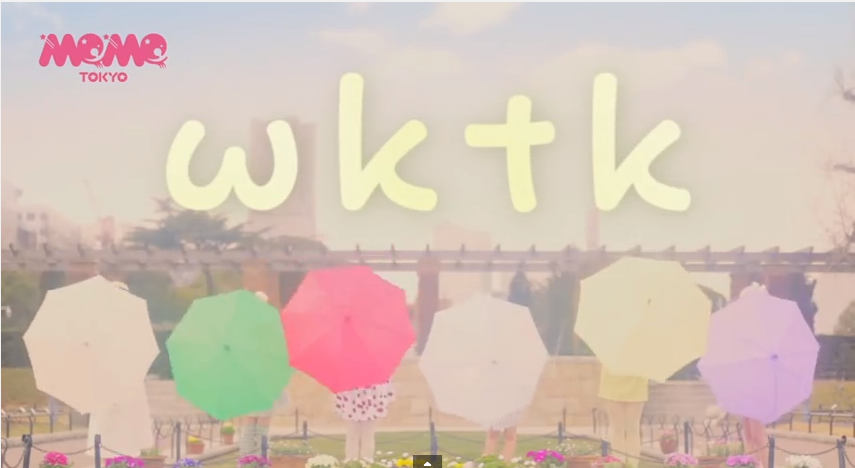
Beyond this, the PV is pretty unremarkable. This is an exercise in adorableness. The cheerleading scenes are cute, and all the group scenes work nicely together. I do like when they write wktk on the screen; it’s a nice touch.

fancyhoppe3

This PV isn’t remarkable. It’s made well (as expected) and nothing is bad, but it’s just pleasant. Like the song. 7/10

Overall, this is a strong single. It might not be anyone’s favorite Dempagumi.inc single (especially with last year having W.W.D/Fuyu e to Hashiridasuo and W.W.D II/Not Bocchi… Natsu) but this is hardly a misstep for the group. If anything, it’s nice to have a mellower Dempagumi.inc single, to show that they can excel at this too.


Idol Thoughts: What I’ve Been Up to..

Hey gang! Sorry I suddenly dropped off the face of the planet for two weeks. I was working on a project…

If you follow my twitter at all you might have seen, but I made a book proposal to the 33 1/3 series. This is a series of books focusing on a single album for each book. I found the series through Ray of Idolminded, and as soon as I saw that the series was accepting submissions I jumped on it.

And yes, my submission is AKB48’s 1830m.

I have no idea how this will be received, to be honest. The series hasn’t really done anything like it; the majority of the albums reviewed are rock, and idol music isn’t the natural progression. Yet, on the other hand, they don’t exclusively do rock albums or even albums that are considered “good.” The book I’ve read from the series was based off of Celine Dion’s “Let’s Talk about Love” and it was focused on ideas of taste and why people like music that others hate. I saw that two people this year submitted ideas on writing about Miley Cyrus’ album BANGERZ. I feel like AKB48 isn’t out of the realm of possibility.

Even still, this was an interesting experience for me. I was trying to pitch the idea of idol writing and a Japanese idol group to people who, as far as I know, have little to no knowledge of it, let alone interest. Writing my proposal was an interesting exercise in trying to convey idol culture and AKB within the constraints of the questions at hand. I worked hard at it, but if a miracle happens and they decide to accept my proposal I know that this is something I will have to polish and test on others, to see if I did a good enough job.

I like writing on Happy Disco. Writing about idols and Japanese music is fun for me, and it’s the type of thing that I wish I could do professionally. If this works out, this wouldn’t necessarily make me rich or famous, but it would be writing about idols, getting some money, and getting a very nice stepping stone to show for possible future writing jobs. But like I said, this is still a very long shot to get, so I’m not going to bet on this.

Ultimately, though, I do wish that something like this would happen; if not my book than another JPop book. There are some assorted books about JPop and idols; at this point a lot of them are academic and, thus, expensive. I would like to buy Idols and Celebrity in Japanese Culture, for example, but justifying that $69.30 price for a kindle version alone is difficult. Some books touch on the concept of idol music (like Japanese Schoolgirl Confidential) but not to a really major extent. An accessible book about idol music might be a good step into getting more people to talk about it and think about this type of thing seriously, which is something I’d like.

Again, I have no idea if this will actually be accepted, and I don’t want to get my hopes up. This is just why I’ve been away from the Disco for a while. Wish me luck!

Your Thoughts: Idol Demographics

Hey all! Long time no see! I was busy with a personal project, but I’ll let you know about that in this week’s new Idol Thoughts post.

We’ve got comments from Steve Summers (writing at Selective Hearing) and Skoban! Comments from these guys are in bold italics, my responses are in plain text. First comment is from Steve:

The main point I wanted to bring up here is just in regards to your last 2 paragraphs. You seem to speak with the assumption that idols are something new and have been “working themselves into the mainstream culture” lately. Thing is, idols have been around since the 60s, and for most period of history within those almost 60 years, idols HAVE BEEN pretty mainstream and accepted outside of wota, with a few exceptions like the early 90s and mid 2000s. It isn’t something new that idols are being marketed to the mainstream and accepted by it to some extent.

I understand where you’re coming from. I mean, I really like Matsuda Seiko, and the 80s in particular had a lot of that back and forth between Matsuda Seiko and Nakamori Akina in sales. Idols have been in the mainstream since their introduction. However, that’s not always been the case. I doubt that people are going to go “oh, I like Matsuda Seiko’s music, so I ought to give MomoClo a try.” The idol industry has changed a lot over the years, and if your experience with idols is liking Candies and Yamaguchi Momoe, you might need an introduction into current idol culture.

Also, I think time really makes things look different in retrospect. Take western music; The Beatles could be considered a boy band, but I doubt Beatles fans care much about One Direction. Even if you don’t consider The Beatles a boy band (and I don’t blame you if you don’t), then even The Monkees have gotten a lot more respect in retrospect, and I doubt people who liked them would swoon over the boys of One Direction. Even if the genres and celebrity styles are similar, it doesn’t mean that they’re necessarily compatible.

Even though the main chunk of the idol’s activities are targeted at wota, they can change their image and activities at a whim to appeal to other audiences whenever they want, and they often do. Like when idols do TV commercials or advertisements for computers or food or something else that has nothing to do with their regular activities, they’re just adapting to the situation and using their general image as “attractive, youthful people” to sell the products they’ve been commissioned to sell. These kinds of things are most of the exposure that idols really get with the mainstream most of the time.

They’re really just marketing tools who are molded and changed on a whim when they get commissioned to do a different kind of job or appeal to a different kind of market, so I think this magazine in particular was highlighting some of the aspects of the idols that more specifically appealed to the audience that is the magazine’s target readers.

That’s true; I know that the groups they focused in particular on were groups they decided were appealing to women. Which makes sense. The thing I found interesting was that there were sections that focused on education, saying “these are major aspects of idol culture.” It wasn’t just the articles about C-ute, 9nine, Tokyo Girls’ Style and the other idol acts deemed popular enough with women, but introductions to very indie groups, glossaries, a map of idol groups and where they fit in with each other, etc. It got fairly in depth for what could have been puff pieces which had interviews with the girls about fashion or something and had them model. It was specifically “these are important aspects of idols” and I thought that was fairly admirable.

With those two things in mind, I think you make it out to be a little bigger of a deal about it than it really is in regards to the industry or culture. Not saying you shouldn’t be excited about the magazine, as you can be excited about whatever you want, but I just don’t think it means anything major for the industry or culture. Interesting to hear your thoughts, though~

I don’t know if the magazine itself is 100% going to change anything. I just think that it’s kind of a way of showing that the times are changing, and that, years into the current idol boom, a popular magazine shows a spotlight on idols that aren’t AKB or MomoClo. I think your points are really valid, but I do think that the female idol fan demographic has been growing, and this indicates that it’s a significant enough interest for a women’s fashion magazine to dedicate an issue.


With that, here’s Skoban’s comment!

Haha, I have the same magazine cluttering my desk XD

I agree with you – it does seem like recently, the tides are turning from hardcore, predominantly male idol wota towards increased acceptance by the mainstream. Anecdotal evidence suggests that female attendance for Morning Musume and C-ute events seem to be steadily rising, and this new female audience seem to be composed of more relatively ordinary girls rather than hardcore female wota.

Oh yeah, it really does seem that way. I mean, it’s all anecdotal, but watching older Morning Musume concerts, when they called out “female fans” it used to be a lot quieter than it is now. I watch Team Syachihoko events more than anything, and the female fanbase is really sizable; not just one or two in a crowd. Even at smaller fan events there’s usually a decent number of ladies there. And then you have the Onna Matsuri events for Momoiro Clover Z, where they filled the Budokan with female fans. (I remember the concert where they first announced the first Onna Matsuri; some of the female fans were flipping out).

There seems to be more acceptance for working as an idol as well. It’s not uncommon for a newcomer to the idol scene to mention a senior idol as their inspiration to enter the industry. Contrast this to the motivations of some pretty established idols:
When they made a guest appearance on an Arashi show, all of MomoClo Z mentioned that they had joined their agency with the hopes of becoming actresses or singers. The agency just happened to put them into a sort of experimental dance group thing, which then blew up to where they are now.
Also, some members of early generation AKB48 joined with the intention of gathering experience in order to become actresses, variety talents, and the such.
There’s also Kusumi Koharu, who created quite an uproar when she mentioned that she considered Morning Musume as a stepping stone on the way to becoming a model.

This is something I have thought about a lot, actually. Even if this current idol boom starts fading, there are a lot of girls who are dreaming of becoming idols, rather than becoming something else. I mean, I’m not sure if that necessarily makes better groups, but I seriously doubt there will be a shortage of idols or girls who want to become idols. It’s already starting; a lot of the younger groups have girls who admire AKB or MomoClo. Yuzuki from Team Syachihoko admired Reni from MomoClo so much that she wanted to become an idol. It’s kind of cool, really.

All in all, I’m in agreement that this kind of increased coverage is something good. It shows that idols aren’t just being supported by wota, but are also being backed by the mainstream audience. And as a plus, it also supports new entrants into the idol scene. More lolis for us!’

And I got another comment from Skoban:

Just so you know, I dashed off this translation of page 14, where the idol feature begins. It does state at the end that they are trying to move beyond AKB and MomoClo

{Huge pink letters} Researching idols in secret {/pink}
Now, you can’t talk about entertainment, the economy, or fashion without mentioning idols.
“Japan’s idols are on the move!”, one really feels.
Therefore in this anan, an idol feature of women, by women, for women.
From the ability to produce themselves; we get feminine power, expressive power, willpower,etc.,
We’ve been studying from these idols, and there really is a lot.
Now, study with all your might the things you want to keep an eye on in the idol scene beyond AKB48 and Momoclo. (Emphasis mine)

As a bonus, top left on the cover: Currently surging, girls hooked on female idols!

Thanks for the translation! I think this is a really interesting statement, especially the whole “feminine power” part. It’s great to see that this was a concerted effort to go past AKB and MomoClo. Thanks!

Idol Thoughts: Idol Demographics

I recently got the female idol issue of anan in the mail. While I was initially excited because Kanna from Rev.From DVL is on the cover (even though she’s not even my rev.From DVL favorite) and it looked like it was writing about a variety of idols, this magazine has been even more interesting.

anan is a Japanese women’s magazine aimed at women in their 20s; it’s not obviously for teens. So in doing this special issue about female idols, this magazine interested me for a couple of reasons.

1. A women’s magazine is doing a whole issue about female idols, which is not the demographic typically associated with idol fandom.

2. The magazine notably doesn’t talk much about AKB48 or Momoiro Clover Z.

This isn’t to say that AKB and MomoCLo are ignored; they are absolutely mentioned. But these mentions are more in the context of other groups, rather than the other way around. The acts that get big features are Kanna (though I wish more focus was on rev!), Morning Musume, E-Girls, Tokyo Girls’ Style, Babymetal, etc. These aren’t small groups, mind you, but it’s interesting that this magazine seemed to want to go for introducing idols to this group, rather than talking about groups that the demographic already likely knows.

There were other interesting aspects of the magazine, as well. One thing I found interesting was how the majority of the magazine was taken up by idols. There were the regular magazine sections near the end, but this magazine was taken up by idols; it wasn’t just an article or a feature. I also thought it was interesting that they clearly seemed to be trying to teach their audience about idols. There’s a section in the middle that has a map of the various idol groups and their relations to one another, a glossary of phrases, and so on. The magazine also didn’t shy away from the indie side of the spectrum; there’s a section that does small introductions on groups that didn’t get a larger feature, and groups like X21 and Sanmyu~ got a chance to shine.

Really, I think this is one of the biggest signs that idol culture has become a thing in Japan, beyond AKB48 and beyond who are traditionally considered to be wota. This magazine is proof that there’s an interest at the very least in learning more about idols, and that idol culture in itself has hit the mainstream. AKB and MomoClo are still by far the biggest players, for sure, but this shows that this idol phenomenon has reached beyond the male wota audience that most people tend to associate with idol fandom.

Is the audience 50-50 men and women? Probably not, especially for the tiny indie groups. Is every aspect of idol culture going to be accepted by the mainstream? Probably not. That said, this is a step, and a big one at that. This is the type of thing that those of us who love idol groups should be excited for.

Your Thoughts: Fan Behavior

I got two replies this week, from Chiima of Okay!Musume Time and Steve of Selective Hearing. So it’s an exciting Your Thoughts Week!

Chiima Wrote:

have only ever been to two lives; a 30 seconds to Mars concert, and a small Pub live by an amazing Welsh band called 4th Street Traffic. Both were terrific lives, however I never found that there was much communication between fans during either of these lives as, in general, we Brits stick to whoever we’re going to these performances with – we don’t really mingle unless we’re going out to do that sort of thing specifically.

From what I see on videos or from concert clips is that Idol Fans actually come together, as you said – in their chants and how they react to the songs or who is performing. However here, if you chant, it’s usually between you and your friends rather than everyone – the only time we come together is to scream lyrics when the performer stops singing for a second to let the crowd sing along. Really, we don’t join as a whole community of fans, we’re just individual fans in one huge space, watching the same performer.

I want to go to an idol live because I want to just be around a community of people and feel like I belong, rather than standing there as an individual who is seeing the same person as everyone else, but doing their own kind of thing.

Interesting article, it definitely made me think about the only two lives I have ever been to, and how disconnected the fans are from each other here!!!

This is pretty much how I feel a lot of times at shows; at most shows I go to I stick with whoever I’m with and it feels like I’m watching a show and I’m not really part of things. That’s the thing I think I like best about idol shows; the fans are not only there, but they’re participating.

And now, from Steve:

I’ve been to about 60 or 70 concerts in the last 15 years or so, ranging from extreme death metal/black metal to electronic music as well as plenty of idol concerts and even a few random country and bluegrass shows. I’ve been all over the spectrum, and while some concerts generally do have a kind of “community” aspect to them, I never really get too involved in that kind of thing. Here’s an attempt at explaining why.

I guess just as a personal thing, I don’t like associating myself with a crowd or group of people too closely, and not just for some silly fear of “conforming” but I’d just rather be someone taken as an individual. In any group of people I find that I do have something in common with or do find something I can relate to them on, there’s usually at least an equal amount of things about those people that I am against and don’t agree with and don’t want to be associated with. And that’s a part of life, is celebrating being different from others and still being able to get along with them, but there’s something about being part of a “crowd mentality” and blindly banding together with other people that makes me uncomfortable. Again, while I do find things that I can get along with people about, becoming part of “the crowd” just for the sake of community rubs me the wrong way, so I usually just do whatever I feel like doing, regardless of what everyone else is doing.

As I had said earlier, maybe a good example of this is like I said on twitter before, the type of show doesn’t necessarily dictate what kind of “community” or bonding you’ll have with other people. I’ve been to loud, crazy death metal shows and met some of the nicest, most considerate people I’ve ever run into, and run into some of the biggest and most inconsiderate assholes at idol shows. Contrary to everything usually associated with idol music, not everyone who likes idol music is a good person by default or someone I want to be associated with. Just as I’d like to be viewed as an individual, I view everyone else as an individual and don’t use my association with a certain crowd or group to define myself or fill in parts of my personality.

I love and value meeting new people as much as anyone else, especially when I have things in common with them, but it doesn’t mean I instantly want to become their best friend and become part of a “community” with them.

It also rubs me the wrong way how much they put forth this kind of “community” and togetherness aspect amongst idol fans (Japanese ones in particular) at the live shows and stuff, but then proceed to be hateful, disrespectful, and otherwise very unfriendly to other fans in the online space and at some other kinds of idol events that aren’t concerts. It makes the “community” that they represent at concerts feel a lot more hollow and dishonest as a whole, when, in a different environment, they act completely differently.

Hopefully some of this makes sense, even if it seems like we just have different kinds of personalities and approaches to these kinds of situations and may disagree in the end.

I understand where you’re coming from, Steve; I normally don’t like crowd mentality, especially for things with very commercial interests. However, that is something I think I’d like at a concert. If I was able to actively show my individuality at a setting like this, I would; however, it’s impossible to hear or notice one person in a concert crowd. I don’t think the audience has to be noticed, or even should be noticed, but it’s just something I’ve thought about.

I understand where you’re coming from; there are people you don’t want to be associated within any group, and there are some fans in particular with idol fans. However, I personally think there’s value to bonding with someone, even if it’s only for a concert or because you’re chanting together. Due to  my short stature (5’1″) and my general shyness, I generally have to hold back at concerts: I find a place where I’ll be able to see, and I have a hard time meeting people at these situations. I just think that there’s something to be said for becoming part of a group, even if that’s not something I’d even want in my day to day life.

But yeah, I think this boils down to a difference in experiences and a difference in what we value/want.